The Volta System has brought a new way of thinking about packaging recycling into everyday life in Portugal. The idea is simple: an additional amount is paid when purchasing certain bottles and cans, which can then be recovered when the packaging is returned to a collection point.
But are consumers ready to integrate this system into their routines?
n this study, MORE Results sought to understand not only the level of awareness of the Volta System, but also how it is interpreted, the barriers it creates, and the intention of people in Portugal to adopt it.
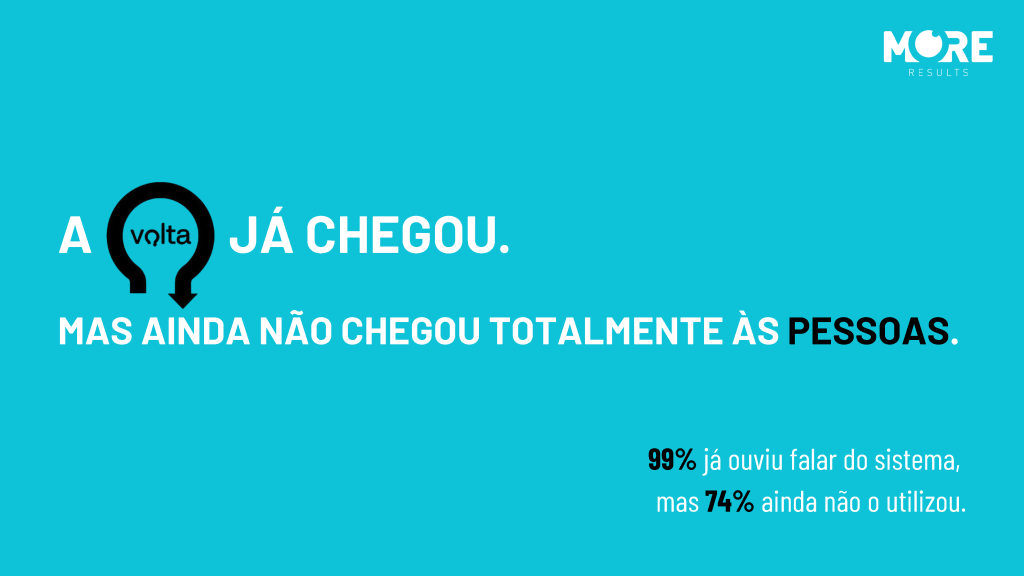
Although almost all respondents have already heard of the Volta System, actual experience with the system is still far from widespread.
Technical details
498 complete responses
Online questionnaire conducted in June 2026 among residents in Portugal aged 18 and over, through the Painel Pinta d’Amarelo.
Methodology: CAWI / online questionnaire
Profile: Gender, age and district cross-checked with panellist data
Theoretical margin of error: ±4.4 percentage points at a 95% confidence level
Data processing: MORE Results
Note: Online panel sample, unweighted.
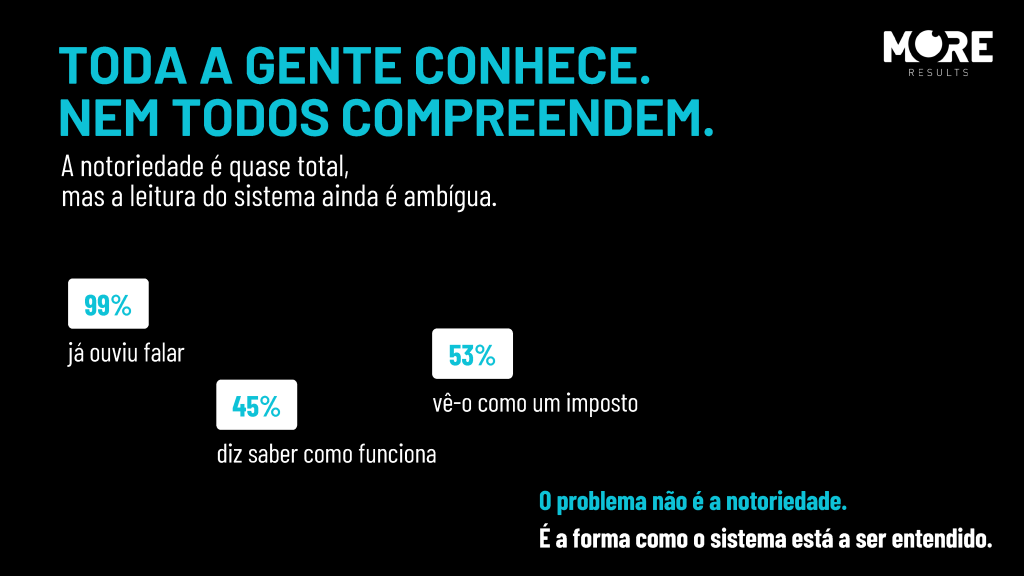
Awareness of the Volta System is almost universal, but the data shows that awareness does not necessarily mean understanding. The way the system is interpreted remains ambiguous, especially when the amount paid is perceived by many as a tax.
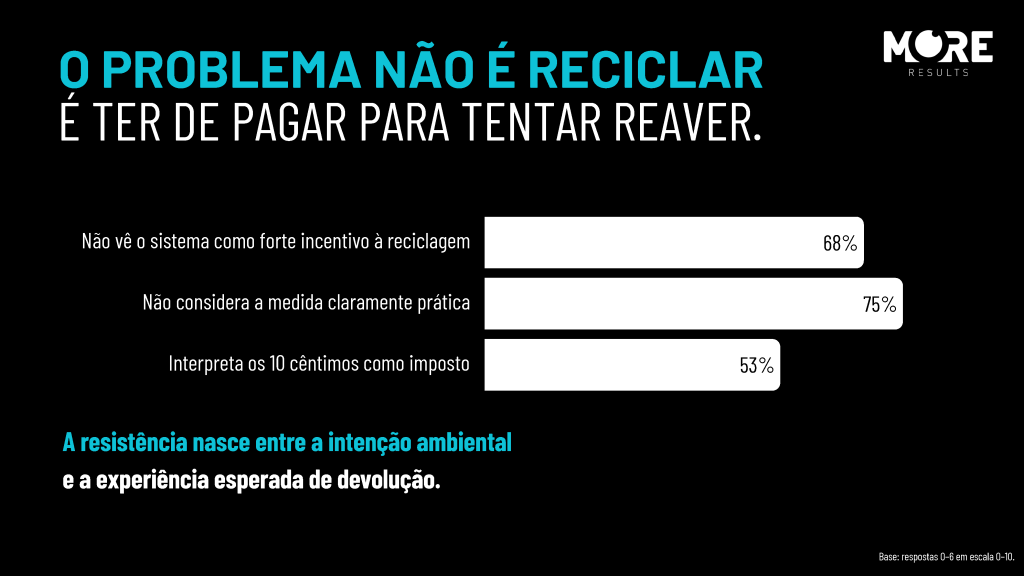
The data shows that resistance to the Volta System is not necessarily linked to the idea of recycling. The critical point appears to lie in the expected experience: paying upfront, storing the packaging, returning it in the required condition, and only then recovering the amount paid.
When this process is perceived as impractical, the deposit is no longer seen as an incentive and instead becomes understood as an additional effort.
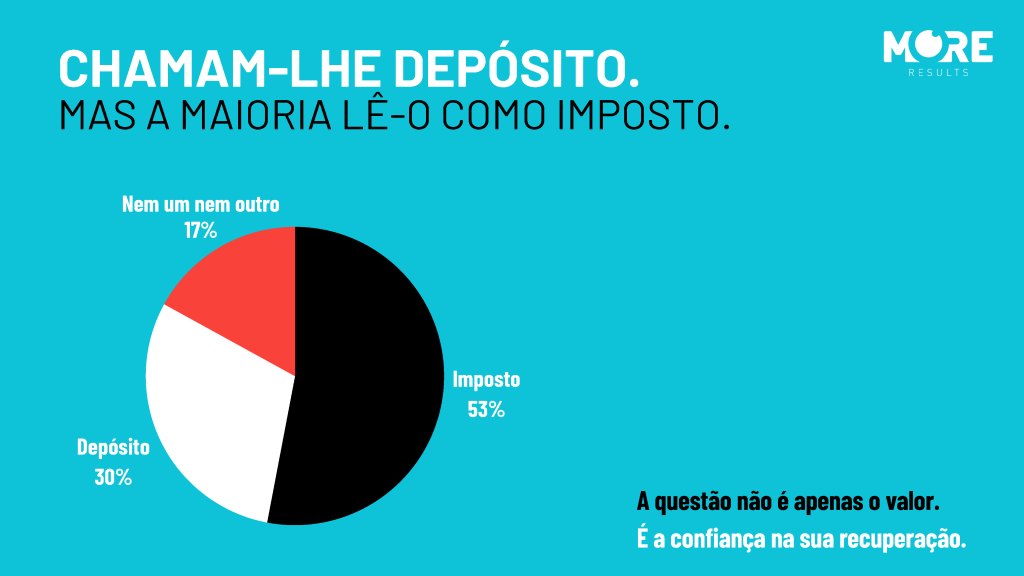
The way consumers interpret the 10 cents is central to adoption of the system. Although the amount is presented as recoverable, more than half of respondents perceive it as a tax.
This perception shows that the challenge lies not only in the technical functioning of the Volta System, but also in consumers’ confidence that the amount paid will, in fact, be easy to recover.
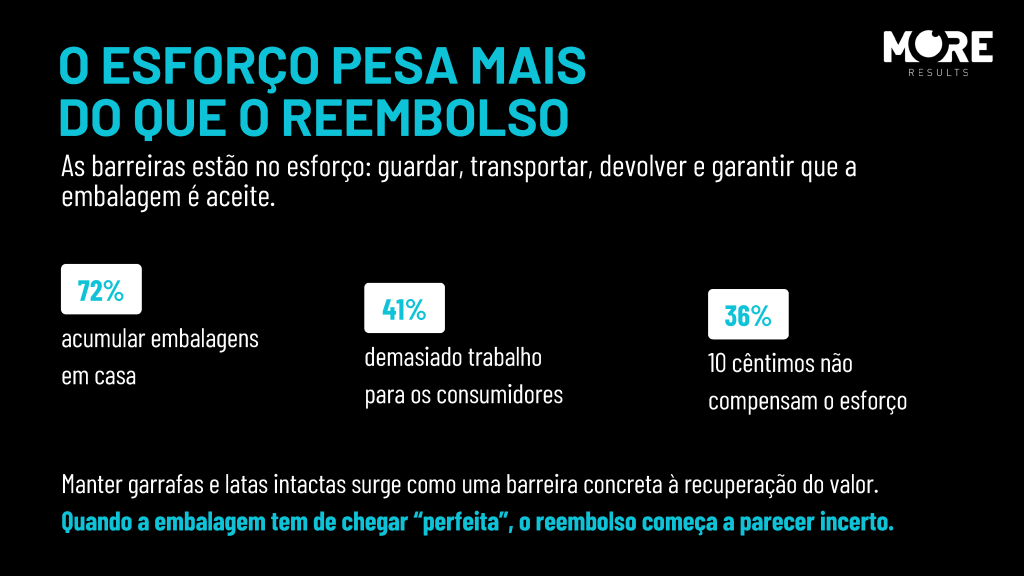
The barriers identified show that adoption of the Volta System depends less on environmental intention and more on everyday convenience. Storing packaging, transporting it, ensuring it arrives intact, and finding an accessible return point all become part of the experience.
When the perceived effort is greater than the reward, the system is no longer seen simply as a recycling measure and instead comes to be evaluated as an additional requirement placed on consumers.
To access all the results, download the full study. here.